
Understanding the Gold Coast’s Local Growth Management Strategy (LGMS)
Part 2 of my planning series
In my last post, I explained the Local Government Infrastructure Plan (LGIP) and why it matters for the future of the Gold Coast.
This time, I’m looking at another major planning document currently being discussed by council: The Local Growth Management Strategy (LGMS).
I cover what the LGMS is, what it means for Labrador, Parkwood, Arundel and Molendinar, what councillors have had to say so far, and the issues I’ve raised.
What is the LGMS?
The Local Growth Management Strategy is a long-term planning document that maps where housing growth could occur across the Gold Coast over the next 20 years.
Council’s website says:
“The Strategy is a long-term, big picture planning tool helping to tackle future planning and growth matters. Using an evidence-based approach it will identify and address growth challenges and opportunities, so we can plan for these at a neighbourhood level.”
The Gold Coast is projected to reach around one million residents by 2046, and planning for that growth raises important questions:
- Where will new housing go?
- What type of housing will be built?
- How will infrastructure keep up?
The LGMS looks to answer this. By itself does not change the rules, it’s a non-statutory document, meaning it is not legally binding.
However, it is important because it guides the development of the next City Plan. Once changes move into the planning scheme, they become the rules that shape future development.
So while this document doesn’t approve buildings today, it helps set the direction for future planning decisions.
How this could affect Division 7
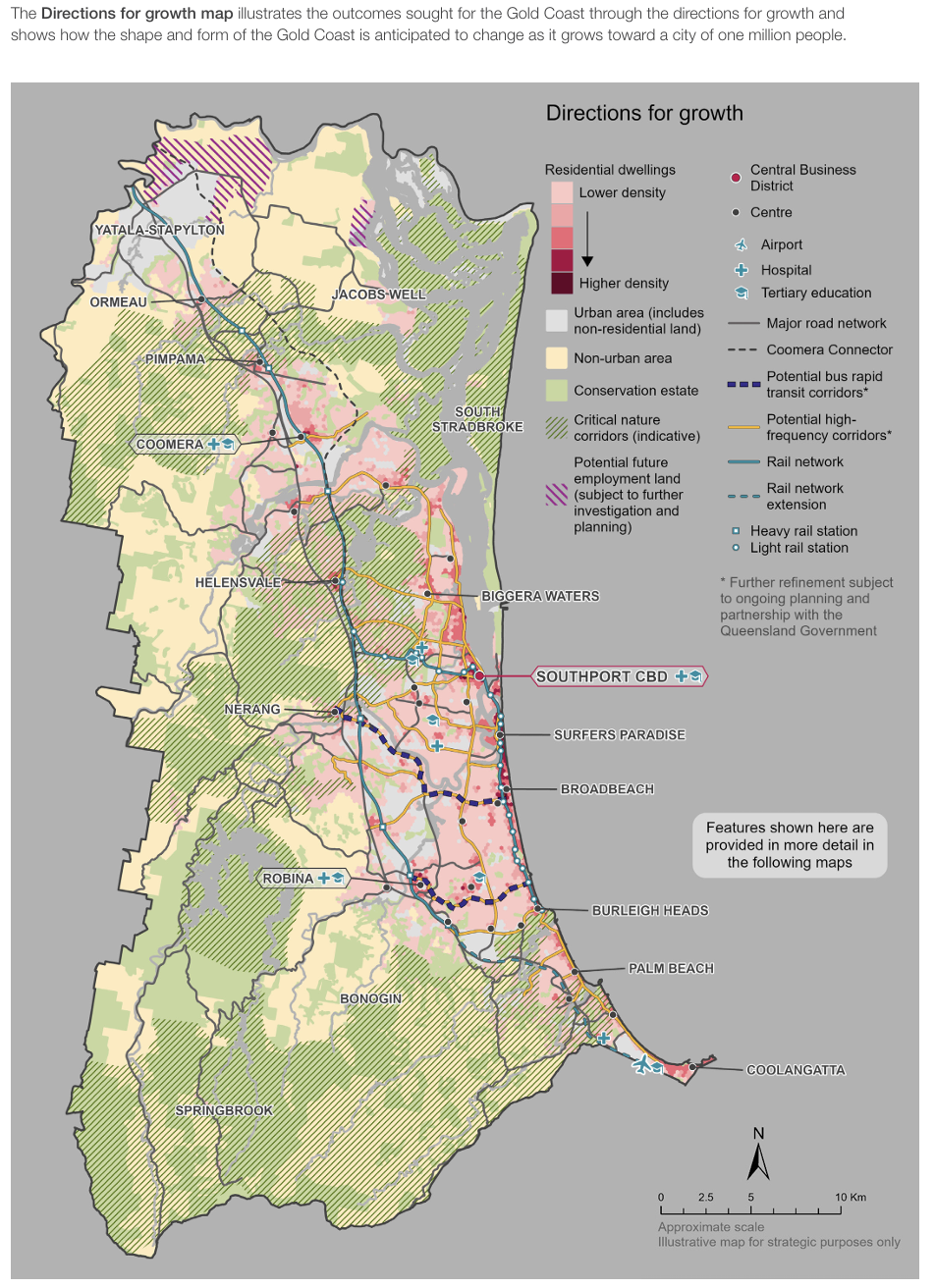
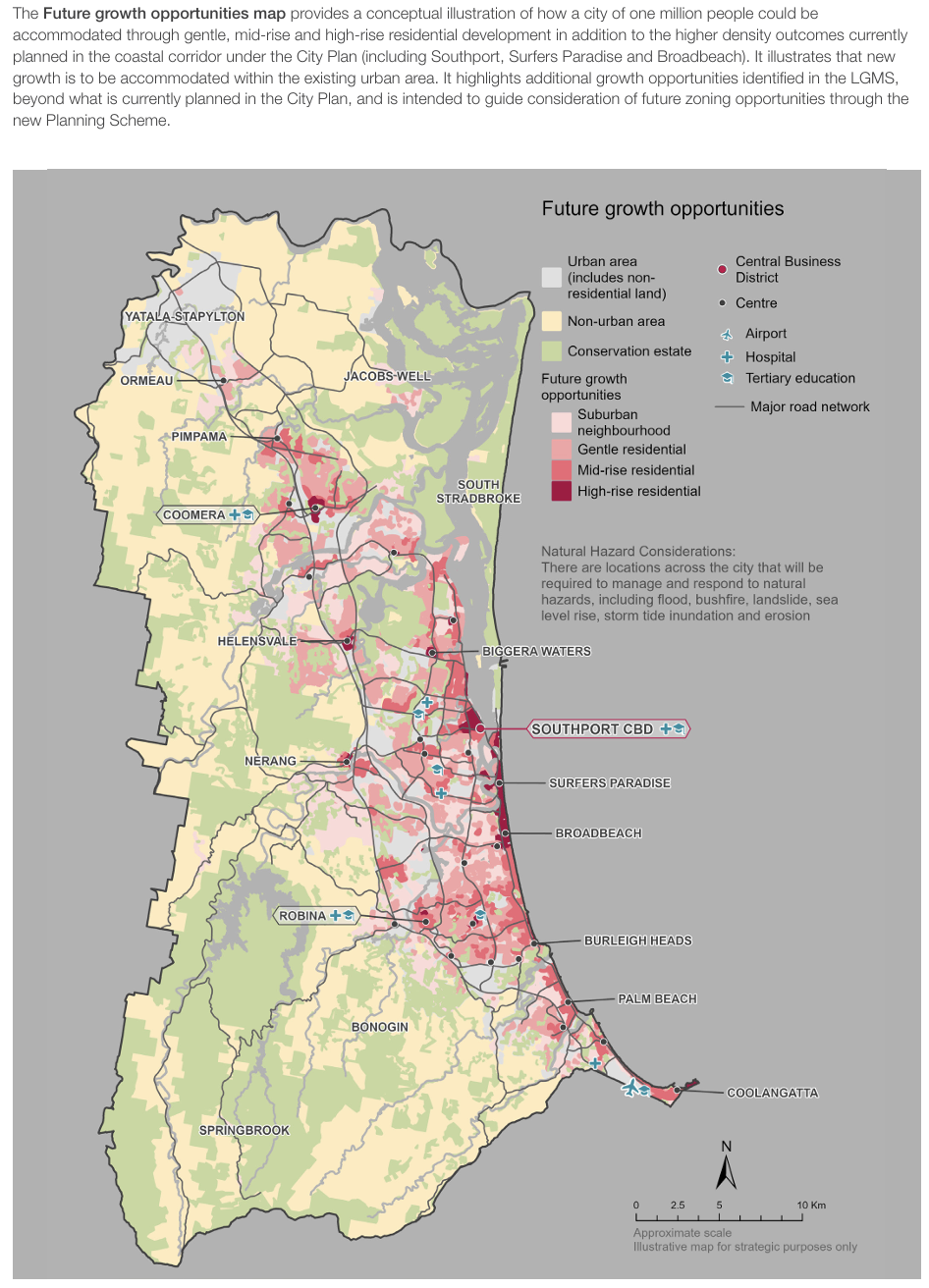
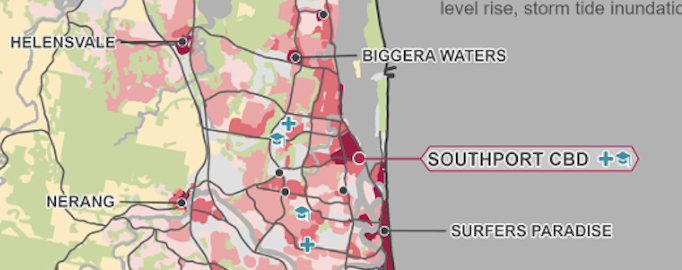
I recently recorded a short video explaining what the LGMS maps show for Division 7, including Labrador, Parkwood, Arundel and Molendinar.
In it, I talk about:
- where changes in density and height could be made
- what justifications are given, and if they make sense
- what this could mean locally
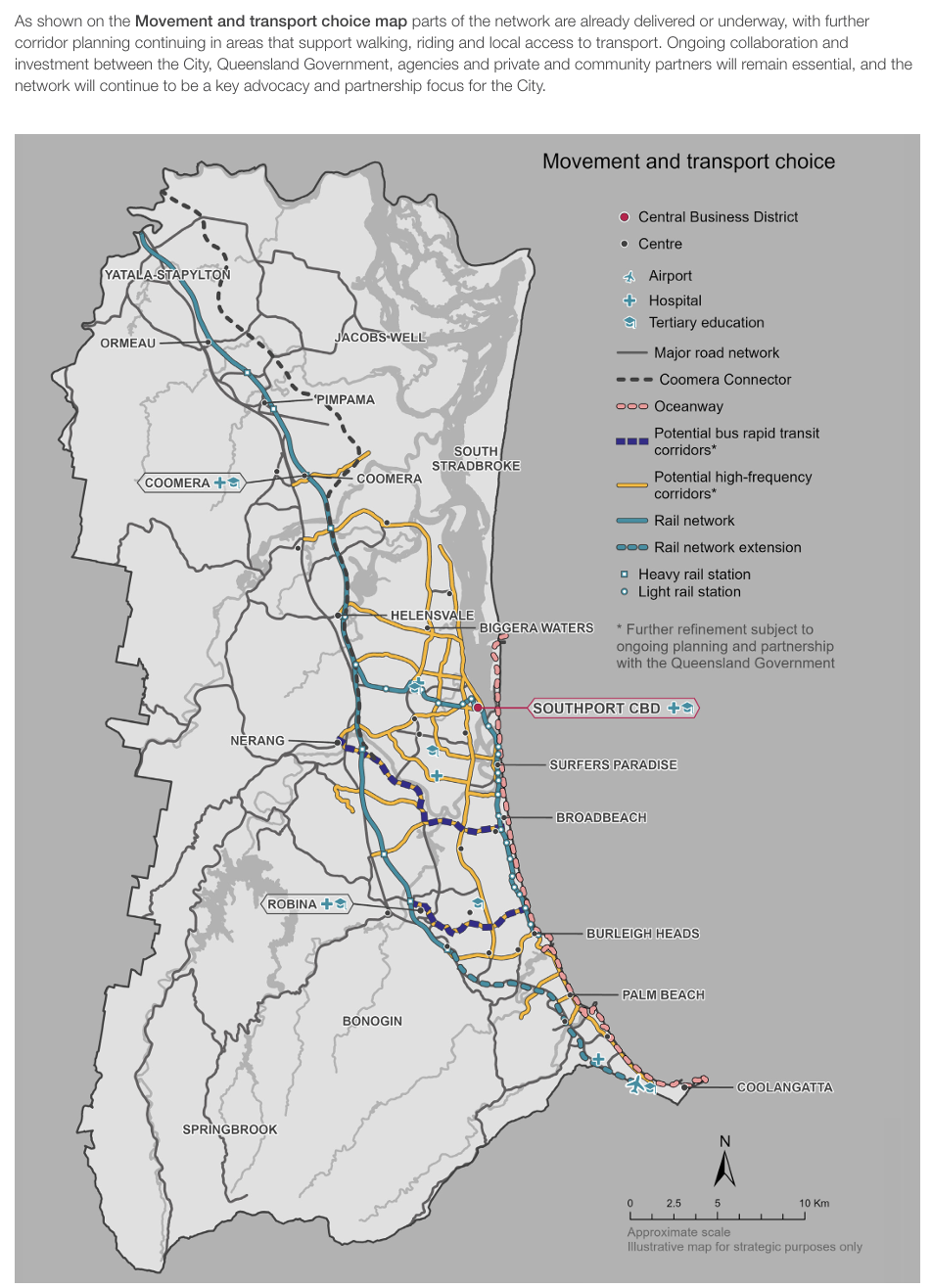
1. The maps
2. Housing types and heights
Council identified 12 different kinds of homes that fit into:
- gentle residential areas (low to low-medium)
- mid-rise neighbourhoods (medium)
- centres that accommodate high-rise living (medium-high to super tall).
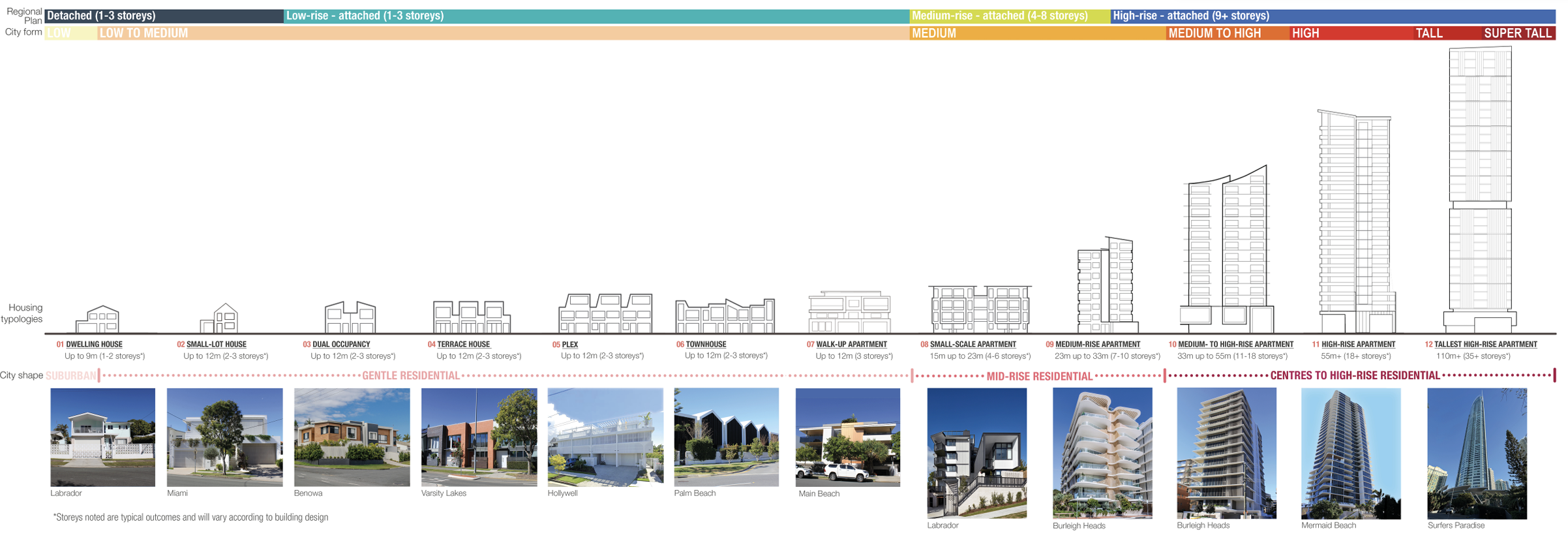
If you didn’t watch the video above, our suburbs fit into the maps in this way:
3. How our suburbs look on the maps
- Parkwood – mix gentle residential & medium rise
- 9m – 33m
- 4 – 10 storeys
- Arundel – mix suburban & gentle residential
- 9m- 12m
- 1 – 3 storeys
- Molendinar – mix suburban & gentle residential
- 9m- 12m
- 1 – 3 storeys
- Labrador – mix high-rise, mid-rise & gentle residential
- High-rise at water
- 55m+
- 18+ storeys
- Mid-rise from water to Government Rd
- 15-33m
- 4-10 storeys
- Gentle residential from Government Rd to Olsen Ave
- 9m-12m
- 1-3 storeys
- High-rise at water
Council debate on the LGMS
The LGMS recently went to the City of Gold Coast Planning Committee on 24 February.
Councillors were asked to vote on whether to endorse the strategy in principle so consultation could move forward.
The result?
A split vote: 4 in favour, 4 against.
The chair, Cr Mark Hammel, used his additional vote to tip in favour of endorsement, so the decision will now go to a full council meeting on 10 March, where all councillors will vote.
Concerns raised by councillors
During the meeting, Councillors Naomi Fowler, Dan Doran, Donna Gates and Josh Martin explained why they could not support endorsing the LGMS in its current form.
Their concerns included:
- Existing planning capacity – that the current City Plan already plans for around one million people by 2046
- Community awareness – residents being unaware of a new planning scheme, or what an LGMS even is
- Community consultation – although a high level of consultation is being promoted, this doesn’t reflect the reality of what has occured
- Suburb specific concerns – when it comes to mapping
- Potential changes in low-density areas
- 300m2 lots
- Multi-storey buildings near single-storey homes
- Infrastructure pressures
- Transport and infrastructure keeping pace with growth.
My views
Planning for growth is necessary.
While the current City Plan does allow us to accommodate projected growth, we need different housing types to meet future needs.
I agree with what Cr Gates has to say in the video above, and have these concerns:
1. Community consultation
A big part of the debate around the LGMS has been whether the community has really been brought along in a meaningful way.
Council’s engagement summary points to several consultation activities, including a Community Insights Panel of more than 300 people.
I was part of that panel.
We were told this would be an ongoing panel involved over time as the LGMS developed. In reality, there was:
- one session in mid-2025
- access to an online portal in November
- just 29 hours’ notice for an online session in December that was meant to seek feedback on the draft LGMS.
That session was cancelled three hours before it was due to start, due to concerns about the short notice. We were told it would be rescheduled. It never was.
Three months later, a full LGMS was before the Planning Committee.
From my perspective, this was not a genuine “close the loop” process. The panel was not meaningfully brought back in before the strategy went to councillors.
Council’s own report shows awareness was low. It found people want clearer suburb-specific information, better transparency, and early involvement in decision-making.
That does not read like a community that has been thoroughly consulted. It reads like a community that is still trying to catch up.
2. Justification for where growth goes
One thing the LGMS does well is recognising the need for different housing types to provide more choice to the community.
Where the LGMS becomes more contentious is how locations have been selected for that growth.
Planning decisions are typically justified using criteria such as:
-
proximity to public transport
-
access to services and centres
-
infrastructure capacity
But when you look closely at the maps, there are clear carve-outs that don’t always appear to align with those criteria.
For example, some areas remain unchanged despite being close to major centres and services.
At the same time, the strategy suggests growth in places like Labrador stating:
Existing centres and transport corridors around Labrador, Runaway Bay and Biggera Waters will accommodate growth through medium- to high-rise apartments near shops, services and public transport such as light rail stations.
That raises an obvious local question.
Southport already has light rail. Labrador does not.
Yet Labrador appears to be identified for significant change, while other nearby areas remain largely untouched.
This is why transparency around the criteria used to select growth areas is important.
If the community can clearly see what the criteria are, how they were applied and why some areas were included while others were excluded, then the conversation about growth becomes much easier to have.
3. Sense of place and suburb character
When we talk about growth, it’s easy to focus on numbers, but planning is also about sense of place.
Last week I asked the community a simple question:
Do you live on the Gold Coast because of the city, or because of your suburb?
Many people said it’s the suburb that matters most.
People talked about proximity to the Broadwater, beaches and parks, character homes, village feel, established trees and gardens, and the feeling of living in a neighbourhood where people know their neighbours.
As one resident said:
“Those different vibes are what makes the GC special — each area is so unique.”
The current City Plan already allows significant growth as the Gold Coast approaches one million residents by 2046. Personally, I think the LGMS maps go to far in identifying large areas where higher density and building heights should increase across many suburbs.
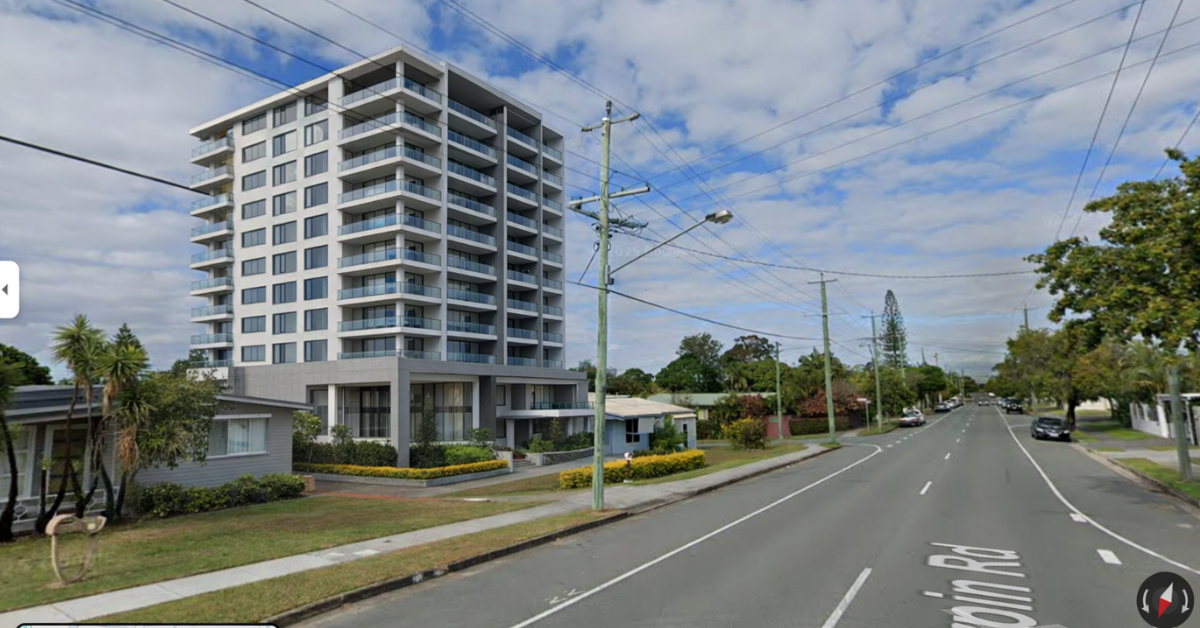
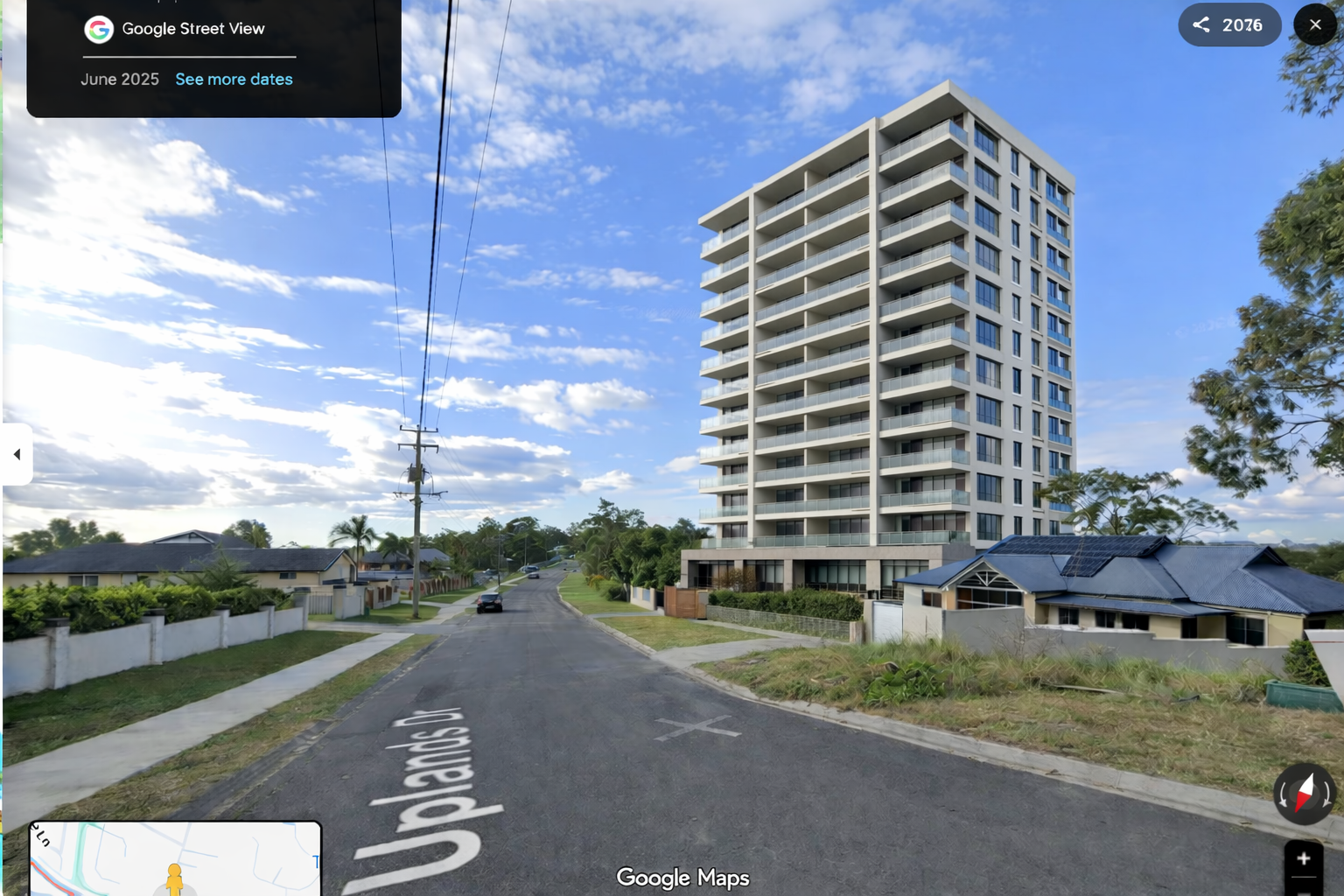
If those settings are written into the planning scheme, it could mean buildings of four to ten storeys next to single-storey homes in Labrador and Parkwood, without a need for community consultation.
For some, that could go up to 55+ storeys near the water.
For many residents, the concern isn’t growth itself, but whether the character and identity of the suburbs they chose to live in will still exist as the city evolves.
What happens next?
The LGMS will now go to a full council vote Tuesday, 10 March.
If endorsed, it will move forward as part of the work that informs the next City Plan.
That means the discussion about how the Gold Coast grows is far from over.
Your thoughts
Planning decisions like this affect every suburb differently.
So I’m interested to hear from you.
- Have you heard about the LGMS before?
- What do you think the Gold Coast should look like in 20 years?
- How should growth be managed in your suburb?
Newsletter signup
Stay up to date on local issues:
Thank you for keeping a close eye on this and keeping us informed Jenna