

The Power of the Gold Coast Community During Cyclone Alfred
When Cyclone Alfred hit the Gold Coast, the true strength of our community was on full display. Neighbours checked in on each other, strangers offered support, and local groups mobilised to fill the gaps where help was needed most.
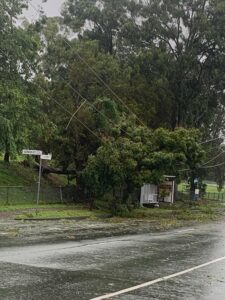
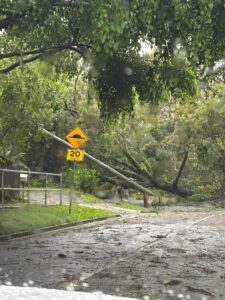
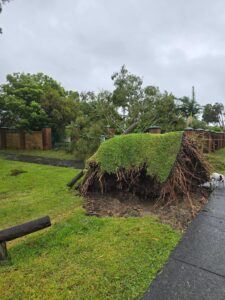
Community groups stepping up
Labrador based pop-up support hub
Before the cyclone hit, National Disaster Management Service (NDMS) was preparing and reaching out to contacts to set up a post-cyclone support hub for those affected. After chatting with several councillors and Bonney MP Sam O’Connor, I helped lock in Sam’s office as the drive-through relief station location they were looking for – a perfect, accessible spot for those in need.
NDMS Recovery Hub at Sam O’Connor’s Office
@ndms_australia, in partnership with Serving Our People and Serve the…
Posted by Jenna Schroeder – Gold Coast Community Advocate on Monday 10 March 2025
As part of that effort, I also connected NDMS with Serve the City, who I’d met at the Labrador Community Garden the week before, so they could arm the pop-up with volunteers. Together with Serving Our People and Orange Sky, they worked together to bring together a relief hub that provided:
- Free grocery packs
- Fresh fruit
- Hygiene essentials
- Sausage sizzle
- Charging stations for devices
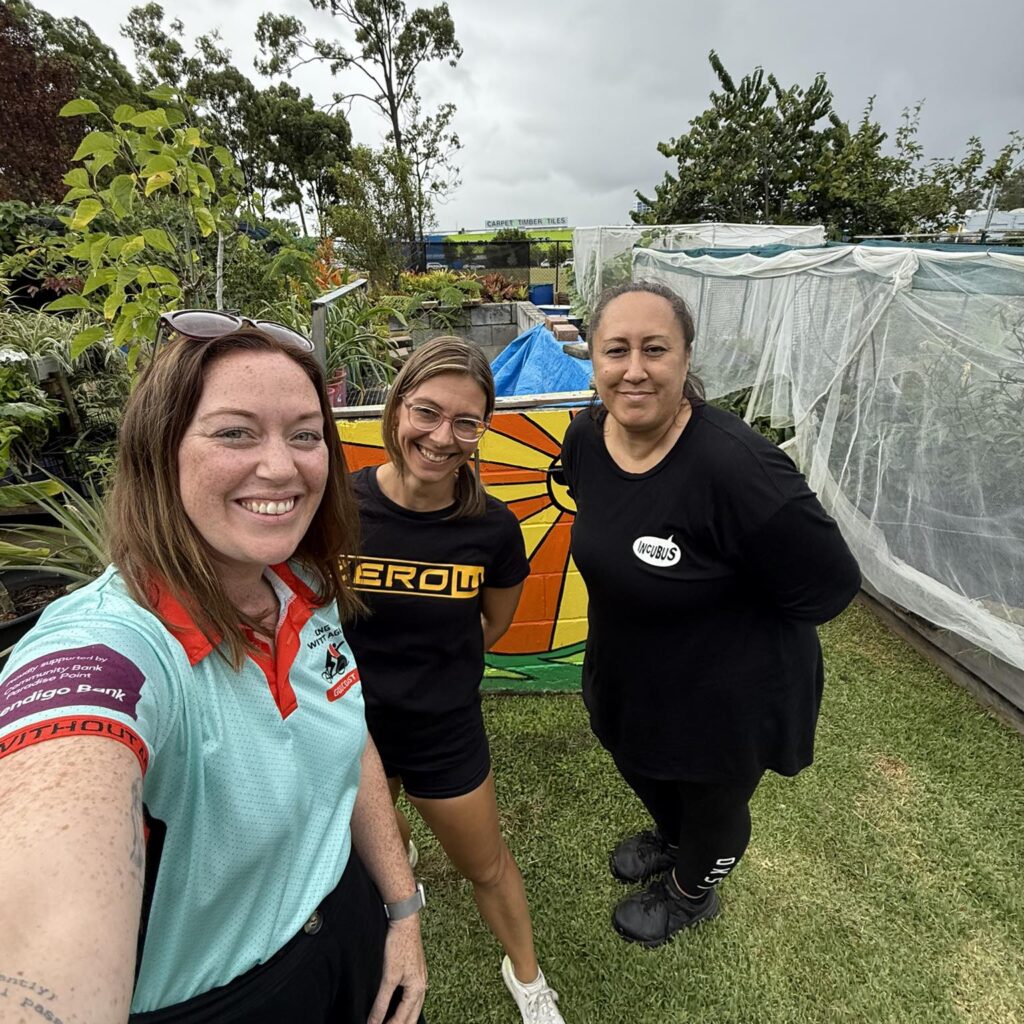
A huge shoutout to Nicole Arrowsmith, independent candidate for Moncrieff, for organising sausages from Gold Coast Gourmet Meats to help keep the BBQ going and Molendinar business Janus Deli for providing amazing donuts.
Labrador Community Garden: a place of connection
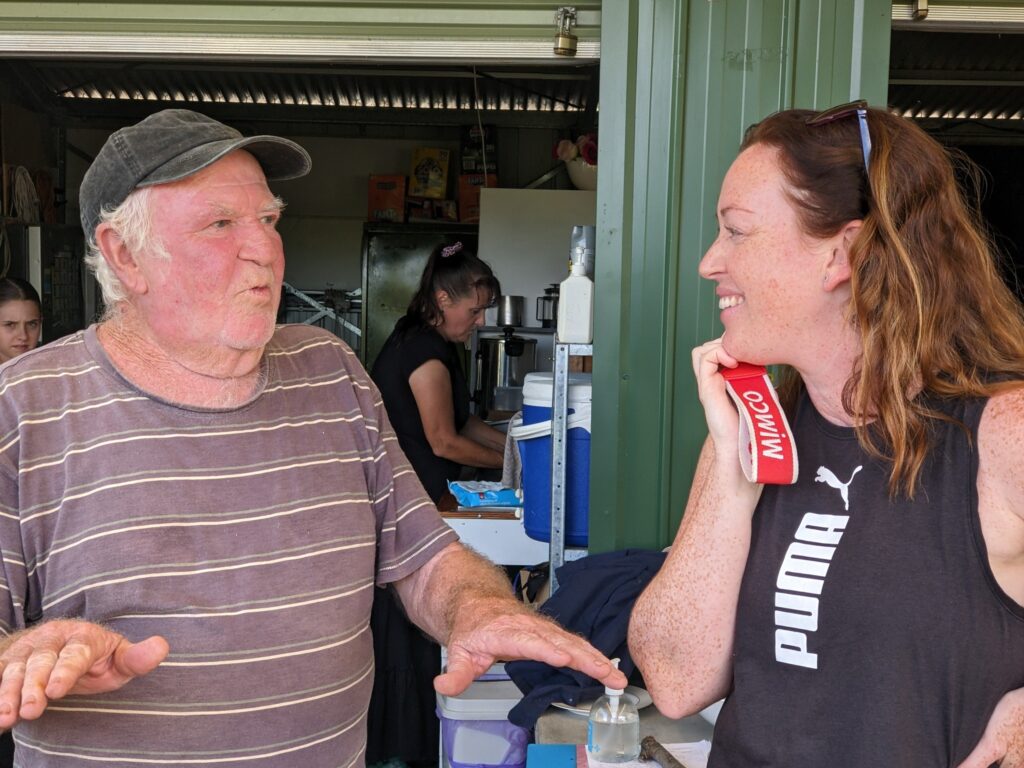
It was lovely to receive a text from the Labrador Community Garden asking members and friends to pop-in for a meal, cuppa and chat. After such a chaotic few days, the garden was such a lovely place to visit and see the smiles from everyone in attendance. Thank you to the committee for inviting me to drop in.
Drag Queens for Dignity & Set Free Care
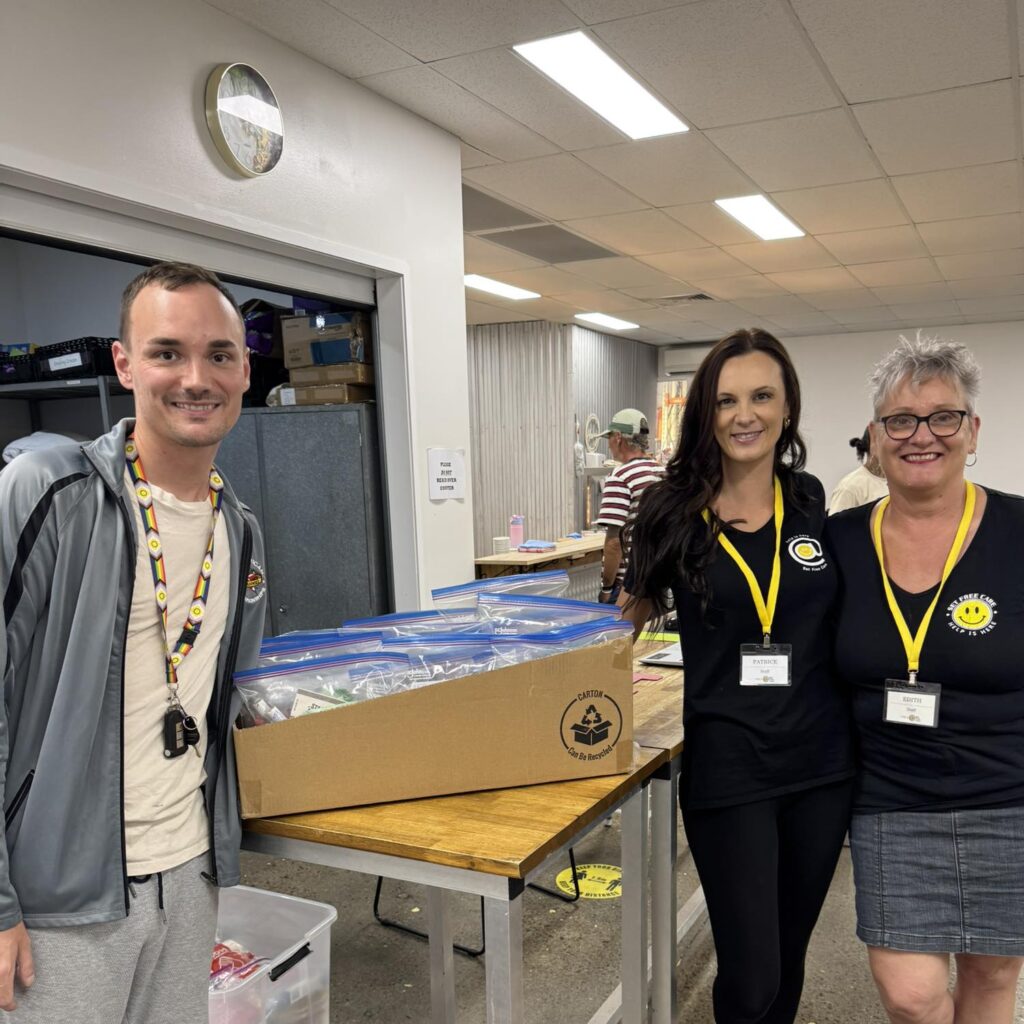
I recently caught up with local Dustin to chat about their Drag Queens for Dignity hygiene drive. Before the storm hit, they got in touch about putting together hygiene packs from some of the donations received the previous month. It was so lovely to see that Dustin got to work and delivered packs to Set Free Care in Southport – a fantastic initiative ensuring people in need had access to essential meals and other items.
Labrador Senior Citizens Centre supporting the community
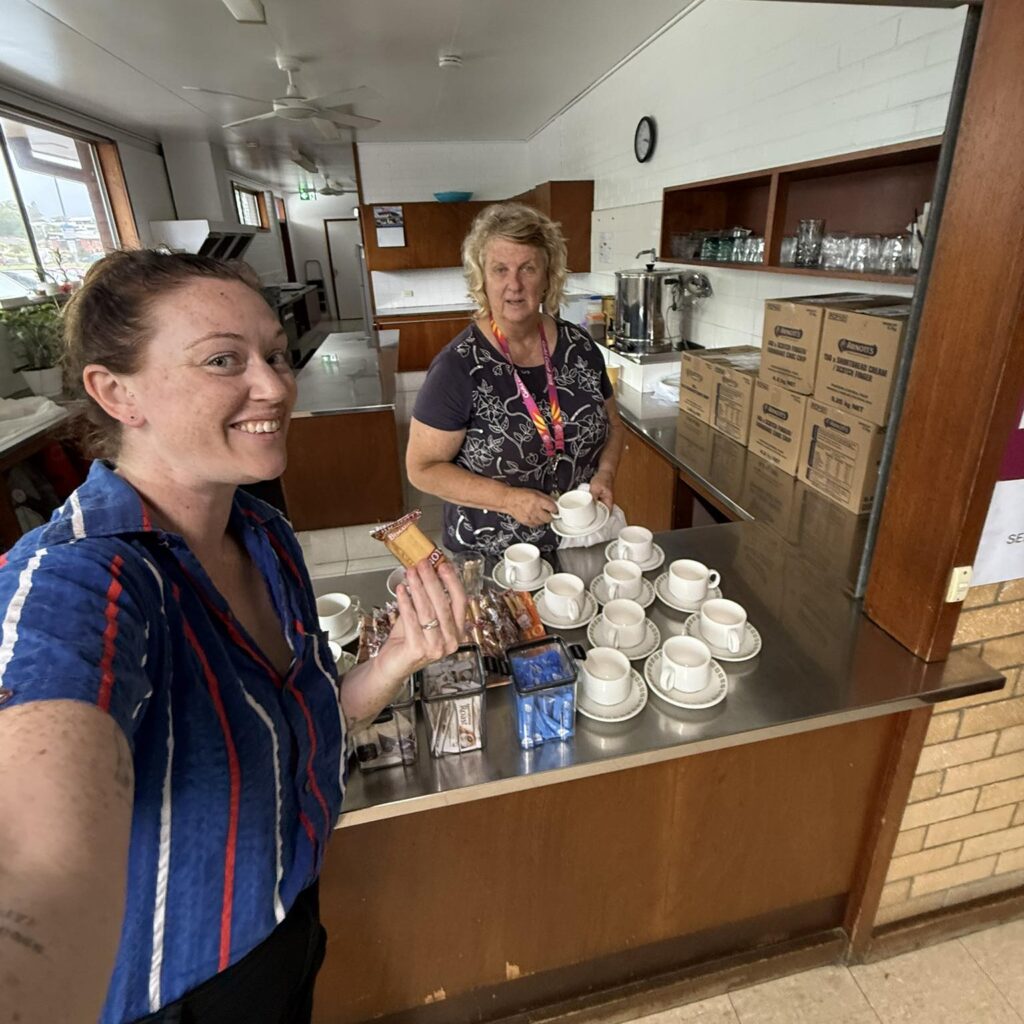
The Labrador Senior Citizens Centre opened its doors for anyone needing power, a cuppa, and a friendly face. Miss C and I spent a few hours there, charging up, chatting to locals, manager Mel and President Margaret Grummit, and (in Miss C’s case) testing out the stage! It was a beautiful example of how important spaces like this are in times of crisis.
Online hubs for support and connection
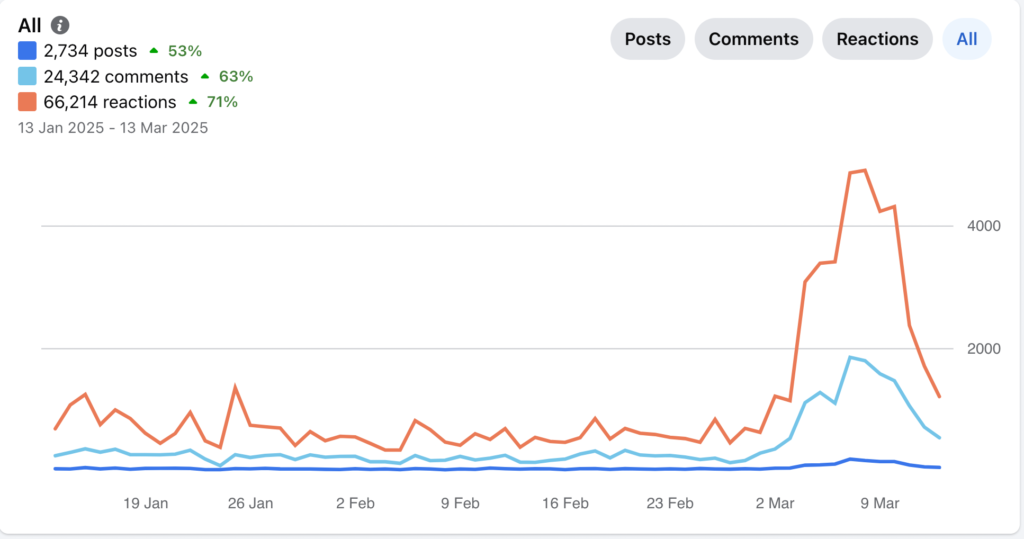
Online community spaces played a huge role during the cyclone, with the Labrador 4215 Facebook group becoming a hub for real-time information and support. Daily membership requests increased over 1000% in the lead-up to and during the cyclone. Comment engagement followed the same trend, showing just how vital these types of online community groups are in helping people stay connected and informed.
As group admin, I worked constantly to collate and curate local, relevant information to prevent information overload – sharing updates from emergency services, power, council updates and where to find essential supplies. But the real magic was in the way people helped each other – offering sandbags, gas for cookers, sharing storm warnings, and responding to calls for help before, during, and after the cyclone.
Local issues brought to the surface
Homelessness in our city
One of the most concerning realities during the storm was the impact on people experiencing homelessness. When I received a message about a man walking barefoot around Arundel as the cyclone approached, I posted in the Arundel / Parkwood Resident Community Group local community group, and the response was overwhelming. Locals went out to check on him, offer meals, and provide lifts to shelter. He had been reached by the Housing Department and Housing Minister Sam O’Connor as well. Unfortunately, despite multiple offers, while he said he was headed to shelter he didn’t. I’m not sure how we help those who don’t want to accept help… it’s a question we need to keep asking.
Older community members at risk
The cyclone also exposed how easily older people can slip through the cracks, particularly those without internet access or family nearby. A friend of a friend reached out about her elderly aunt in Labrador, who when I visited I realised had no preparations, was in a potential flood zone, and had loose debris stacked near her bedroom window. After assessing the situation, I called her family and helped get her to an evacuation centre.
But the challenges didn’t stop there – after returning home to no power, no transport, and limited food, she found herself struggling once again – at one stage sitting at a bus stop unaware that bus services were not running. I checked in, and thankfully, she had been picked up by a church member. This week, I was able to connect her with support, including a Serving Our People non-perishable pack, offer for yard help from Serve the City, chatted to ADA Australia for aged care advocacy advice, and brought her a Labrador Senior Citizens timetable to widen her network of social support. Of course, without the internet she was also unaware of the Qld Government disaster payments.
How many more like her are out there? And how do we ensure better support for isolated older residents?
A community that comes together
Dealing with the cyclone has been difficult for many, but if there’s one thing that stands out, it’s the strength of our community.
Across our local area and the wider Gold Coast, people showed up for each other. Whether it was volunteering time, offering a meal, checking in on neighbours, or simply providing a space for people to connect, it’s been inspiring to see. A huge thank you to every single person, group, and business who has stepped up to support the community.
At the same time, this disaster has highlighted deeper issues – the challenges faced by some of our vulnerable community members, and the gaps in support. These are year-round realities that need attention, advocacy, and action. As we move forward, I hope this experience sparks more conversations about how we can better support our community every day.