
The Forgotten Heritage Study That Speaks to Labrador’s Past & Future
You might have seen a few stories lately about buildings in Coolangatta being considered for heritage listing — the QCWA hall and The Pink Hotel.
They’ve attracted a fair bit of attention, with developers attempting to purchase both buildings.
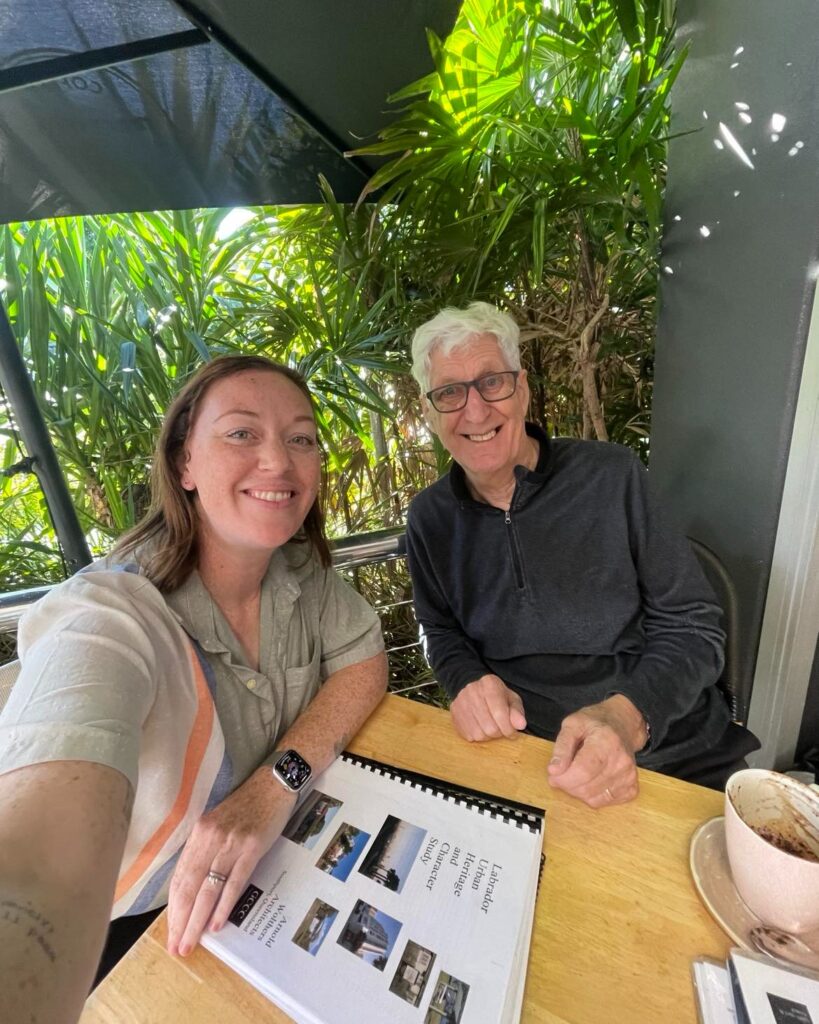
It got me thinking about a meeting I had with local architect Arnold Wolthers last year, who was commissioned by council back in 2004 to create a “Labrador Urban Heritage and Character Study”.
At the time he explained to me that heritage isn’t just about architecture. It can be about character – the streets and spaces that tell a story about our history.
So what can be listed, and what should we be protecting for years to come?
What a heritage listing means
The City of Gold Coast has a responsibility to identify and protect places of local cultural heritage significance.
Right now, the Local Heritage Register includes 84 sites across the city — from the Ernest Junction Tunnel in Molendinar to the former Burleigh Police Station (now in Arundel) to Norfolk Pines at Burleigh and Coolangatta.
At the State level, there are another 19 listings on the Queensland Heritage Register, like Kinkabool (our first high-rise), the Southport Bathing Pavilion, and Southport High School.
Heritage listing doesn’t mean something can’t be touched or changed — it means future development must respect and preserve what makes the place significant. And significance doesn’t have to mean “grand.” It could be a tree, a small hall, a fishing jetty, or even a streetscape that locals have known for generations.

Anyone can nominate a site for heritage listing for free on the Gold Coast council’s website. You don’t need to have the consent of the owner to make a submission.
The Labrador Urban Heritage and Character Study
Just over 20 years ago, Gold Coast architect Arnold Wolthers was commissioned by Council to look closely at Labrador’s history and identity.
His Labrador Urban Heritage and Character Study (2005) set out to define what gave the suburb its sense of place – not through architecture alone, but through community character.

He wrote that Labrador was a “friendly community” built on fishing, family holidays and local connection:
“Labrador has character, it has a social history and it has heritage values worthy of retention. The heritage values lie in its diversity of the eclectic collection of styles and periods of development.”
He also warned that the suburb’s character was “rapidly slipping away” as infill development took hold.
The report was never formally adopted by council.
What was identified
Wolthers’ study recognised that even though few historic buildings survived, Labrador still had places and features of strong local significance.
Among those were:
- The fig tree at 91 Frank Street
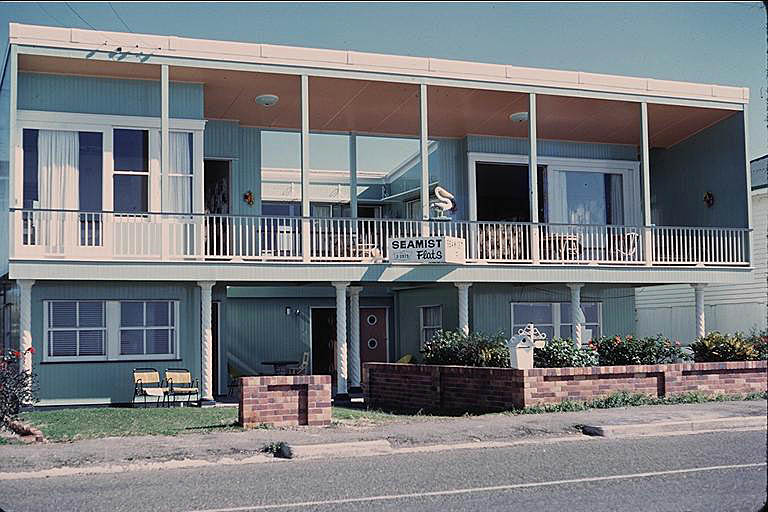
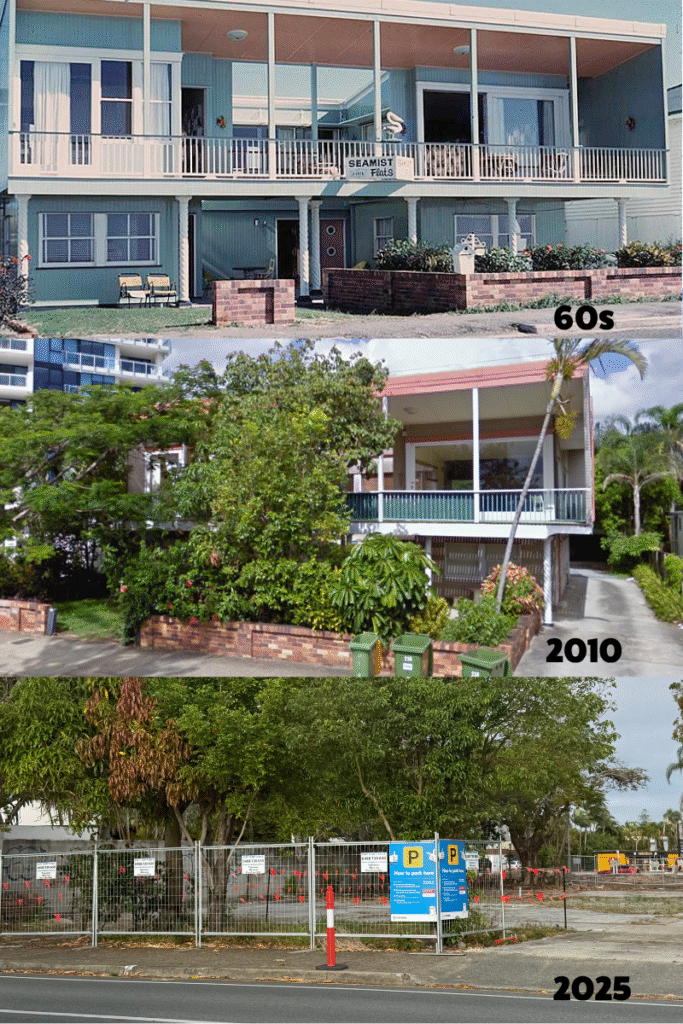
- Seamist Flats at 238 Marine Parade
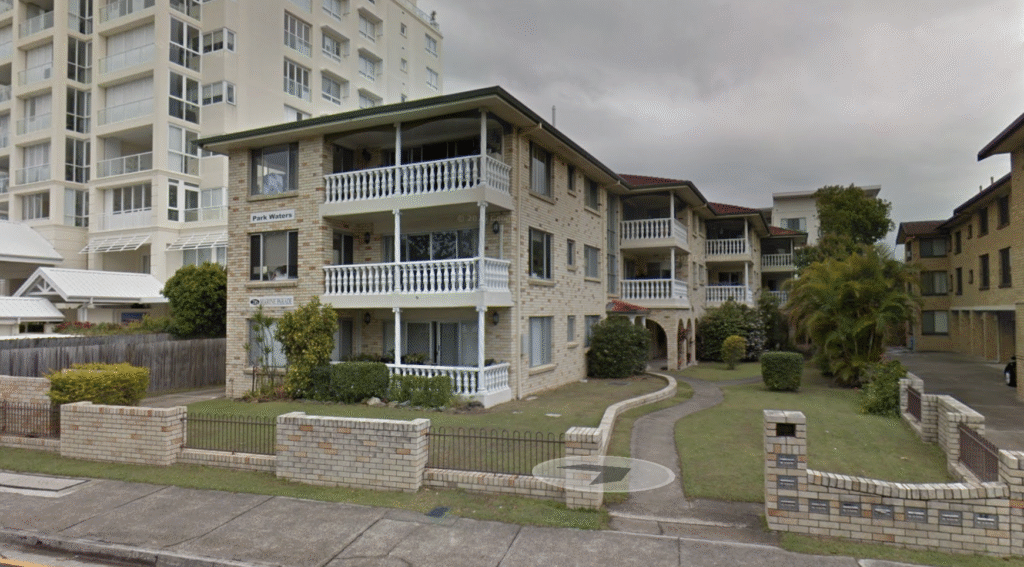
- 216 Marine Parade Flats
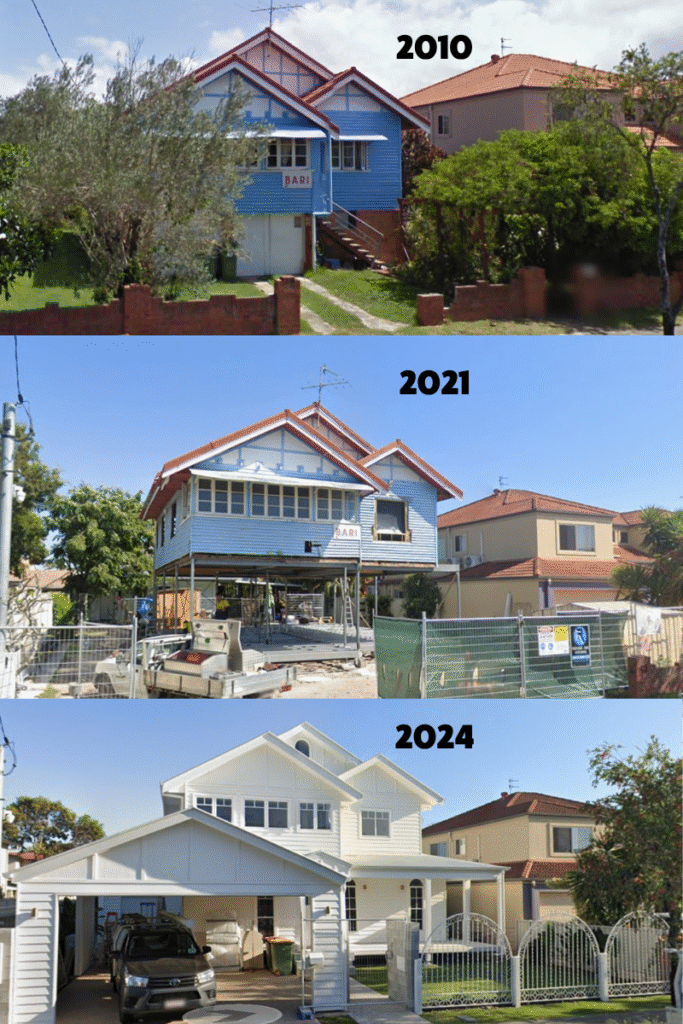
- 26 Broad Street (“Bari”), a classic timber coastal home
- 10 Broad Street
- 48 Broad Street
- “Loder House” at 2 Harley Street (c1920)
- “Burger Hut” at 20 Brisbane Road
- Streetscapes along Hilltop Street, Allden Avenue, Imperial Avenue, and Marine Parade
- St Joseph the Worker church
- Landmarks like Charis Seafoods, Harley Park, and the John Goleby Light
He also recommended protecting significant trees, strengthening design controls to preserve neighbourhood scale, and recognising community landmarks that might not meet State heritage criteria – but still mattered deeply to locals.
“Heritage isn’t always grand,” Wolthers wrote. “Sometimes it’s the familiar streetscape or fig tree that tells a suburb’s story.”

What’s changed since then
Two decades later, much of what the study identified has changed.
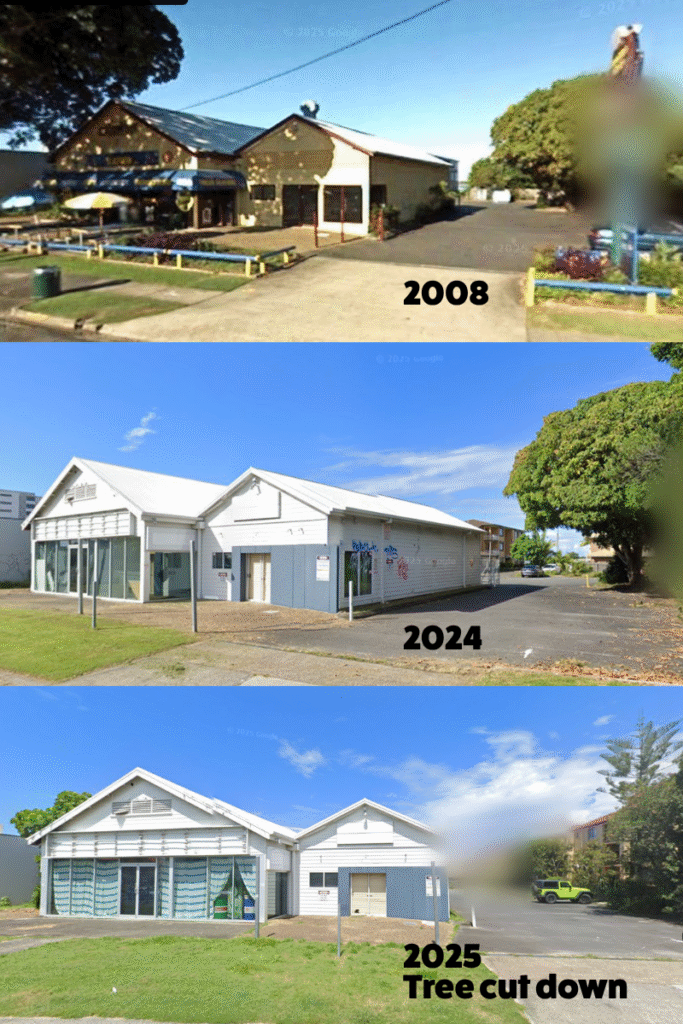
The fig tree at 91 Frank Street — recommended for protection — was cut down in August 2024. It was reported by a local in the Labrador 4215 Facebook group, and I raised it with Council after noticing no public record of an application for removal. I’ll be following up on what happened there.
The Seamist Flats were demolished in January 2025 as part of a likely future development that also cleared the adjoining petrol station. I recently noticed the block has been set up as paid parking.
26 Broad Street has been remodelled into a Hamptons-style home — the frame of the past is still there, but its character has shifted.
216 Marine Parade remains – a rare survivor of Labrador’s mid-century identity.
Why it matters now
The conversation happening in Coolangatta right now – about preserving the QCWA hall and The Pink Hotel – shows how powerful local heritage can be when communities speak up.
Those buildings aren’t protected yet, but Council is considering them for the Local Heritage Register because people see their cultural importance, not just their age.
Wolthers saw this need long ago. He argued that protecting character wasn’t about freezing time, but about keeping a suburb’s heart intact.
“If we love it to death,” he warned, “we risk losing the very qualities that made people want to live here in the first place.”
What can be listed
Under Queensland’s heritage framework, local listings can include more than just old buildings. A site can be listed if it:
- Demonstrates the evolution or pattern of the city’s history
- Represents rare or uncommon aspects of Gold Coast life
- Has potential to yield new information about local history
- Demonstrates the principal characteristics of a cultural place (e.g. coastal cottages or post-war flats)
- Holds aesthetic significance
- Shows creative or technical achievement for its era
- Has a strong or special association with a community or cultural group
- Is linked to the life or work of a significant local person or organisation
That means everything from an old jetty to a memorial, a garden, or even a stretch of trees could be recognised as part of our shared story.
A question for our community
So as the city looks south to new heritage proposals, maybe it’s time to look closer to home too.
What places in our area would you like to see protected for future generations?
A tree? A park? A building? A streetscape that still feels like “old Labrador”?
What should we start preserving before it’s gone?